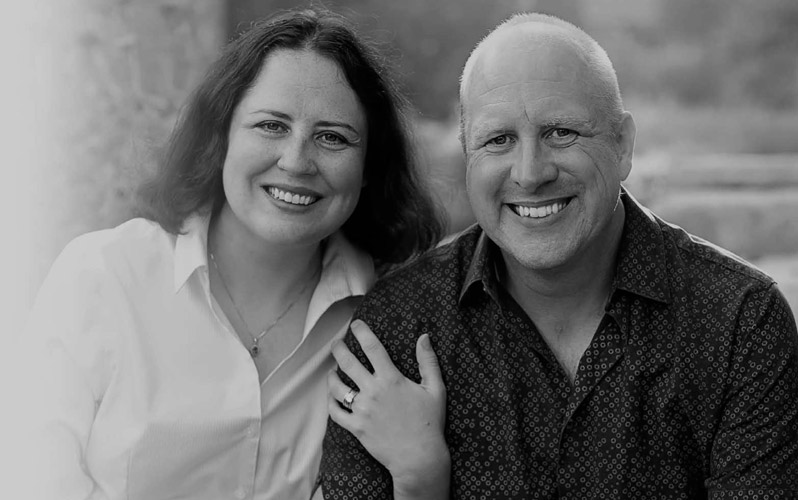

Not Like Me (Blog Tour with author Eric Bryant)

August 12th, 2010

We live in a diverse world filled with unprecedented opportunity. There is a call to move past the barriers that stand between us and those who may be different. Eric Michael Bryant has seen tolerance shown to those who are different than us — racially, religiously, sexually, politically, economically — and believes there must be more. After all, Jesus didn’t just tolerate people; he embraced them all with love.

Not Like Me: A Field Guide for Influencing a Diverse World helps people of faith effectively love, serve, and reach people overlooked by the church.

Using lighthearted humor, engaging personal stories, and a “party theology,” Bryant shows us how to love our neighbors and fulfill the vision Jesus had for the church from the beginning.
Whether that is through building relationships with the help of bounce houses, stand up comedy, or piñatas, followers of Christ will be inspired to actively engage the world around them.

New Beginnings

August 8th, 2010

This blog relaunched last November primarily as a social networking vehicle to support the launch of my speaking ministry and a consulting ministry that I launched earlier this year, Jericho Ministry Solutions. The content has, therefore, been focused on leadership, devotional thoughts, and theology to support those two ventures. While those ventures are still functioning, and you can contact me to speak at churches or retreats through the contact tab of this site and you can contact Jericho Ministry Solutions for more information about consulting, you’re going to notice an expansion in the content on the blog. I recently accepted the position as Chaplain at Southfield Christian School. As such, you will be seeing content related to education and occasionally topics geared towards a teen audience as well. I’m still working out the logistics and how that will look practically on the blog but I’m excited about the new ways this blog will be used for ministry in the very near future. I will continue to generate content that will appeal to all of my loyal reader (my mom and grandparents ☺) as I generate new content that will appeal to my new readers as well. Thanks for reading and please provide feedback to the site. This blog is only as good as the value it adds to your life and ministry.

With that said there’s something else happening on the blog this week that I’m really excited about. BryonHarvey.com is going to be a part of the blog tour for Eric Bryant author of Not Like Me: A Field Guide for Influencing a Diverse World. Eric will be here August 12th talking about his book and answering questions. Please welcome Eric to our community and engage him and his book. I look forward to learning from you and Eric as we discuss how to “effectively love, serve, and reach people overlooked by the church.”

The Fourth Place

July 20th, 2010

Recently the idea of the “third place” has become popular in ministry circles. I’ll try to give a quick definition of the concept here. In the US, we live in three places; home, work, and the third place. There are a variety of expression of the third place; the local coffee shop (think Friends), the corner bar (think Cheers), the local lodge (think The Flintstones). The third place is where people go to socialize. It’s the hub location for their “tribe.”

In ministry circles there have been a lot of conversation about how we should make the church the “third place.” This, theoretically, is a good idea. If people are spending their “third place” time at the church they can connect to the community and grow spiritually.

I’m a little leery of this idea. If I’m spending all my time at home, work, and church, when do I engage with people who aren’t Christ-followers? Yes, I know work is a good place to do that. The people there are stuck with me. I will also concede that the workplace is part of our “mission field.” But is it the most effective place to share Christ? I find the conversations that most often turn to spiritual things are not at work. They’re at third places with third place people. If the church were to become my third place then when would I have these conversations?

I think maybe the church should be the fourth place. We should carve time out of our schedules to engage at church and in church activities but not let it monopolize our time outside of work and home. Prioritize church but don’t make church your third place. Find a place where you can naturally build relationships with people who don’t know Christ and use that “third place” time as mission time. Here are a couple of examples:

• Coach soccer (or whatever)
• Study martial arts
• Join a book club

Don’t make church your third place. You’ll miss way too much of what God is doing outside the walls of the church building. Besides, if the church is people, can the church really be a third place or any place at all?

What are some other third places where you’ve been able to share Christ and see God working?

Risk & Reward

July 13th, 2010

As a guest speaker it’s always tough to choose a topic. This past weekend I felt God leading me to take a more of a risk than I would normally. I was speaking at Bethany Bible Church in Bellville, MI. This was my fourth time speaking there this summer. The church is in the middle of a big transition right now. They’re senior pastor recently resigned and they are now in the middle of a search for a new pastor.

The safe choice of a topic would have been to talk about prayer, or community, or a well-known beloved Bible passage. Originally that was my plan. My original list of topics included all of those. As I prayed over the list asking for wisdom and guidance none of those topics seemed to work.
I felt God guiding me to talk about leadership. I felt that I should give the church tools to help the search committee identify their next pastor, guidance for the church to pray, and a challenge to everyone there on how to be more effective leaders. I shared the Essential Characteristics of Effective Leadership.

So, why was that a risk? Well, it’s not likely that a talk on prayer or community is going to fall flat. Those are easy topics to preach. Everyone likes to say “amen” to a talk like that. Leadership, on the other hand, doesn’t preach as easy. Not everyone gets excited about leadership. Moreover, most people don’t find leadership lessons immediately applicable. It’s really easy for a talk like that to fall flat on a Sunday morning.

Yet, no risk no reward right? God blessed the message and the worship service in huge ways this weekend. The congregation responded incredibly well to the talk. I have several people come up to me and share how God used the talk to impact them. To top that off, one of the members of the search team told me that the team was meeting that night to discuss the position and review resumes. God’s timing is awesome! It’s a privilege to be a part of what God is doing.
Please pray for Bethany Bible Church as the continue they’re search for a new pastor.

The American Heresy

June 29th, 2010

In the comments on my last post I had a spirited conversation with a friend from high school regarding the existence of hell. To summarize my understanding of his argument, he believes that hell is not a real place because hell is evil and God being all good cannot create evil. The references to hell in Scripture, therefore, are metaphors. This is one of the many variations of this idea the United States today. I’d like to take a moment here to share my thoughts on the matter.

First, I believe hell is a literal place where people who do not receive God’s forgiveness for their sin through Jesus in their earthly lives will spend eternity. Hell is a place where those who have not received salvation in Christ receive eternal punishment for their sin (Matthew 25:30, 41; Revelation 14:9-11; 19:3).

This is not inconsistent with God’s goodness. In fact, quite the opposite is true. If God were not to punish sin then he would not be wholly good because he would allow evil to exist without consequence. In this sense, hell is no more evil than prison.

What about the length of punishment? Is eternal punishment really justified for temporal sin? Ultimately, I don’t think we can answer that, because we are incapable of ascertaining the true extent of sin. We do not know the damage that sin does beyond the obvious things that we see and feel. Yet we know that sin is wrong even when there are no apparent damages to the people around us (for instance sex between to single consenting adults is sin although there are no apparent negative effects). We cannot judge whether eternal punishment is fair or not, only God knows.

While this is not comfortable for me, I trust God. I know that God is good. I know that he will do what is right. So, I trust him to do the holy, righteous, loving, good thing. Even when I don’t understand it. I must hold myself to God’s standard and not attempt to hold him to mine. He’s God. I’m not.

There’s a lot more that could be said here but this is enough for one post. What do you think?

Own Your Own Sin

June 16th, 2010

In my last post I asked if God was responsible for sin? I argued that God is, as least secondarily, responsible for the existence of sin because although he had the power to prevent it he chose not to.

I offered the analogy of someone aware that a bank robbery was about to occur and did not call the police. That individual is secondarily responsible for the robbery because they had the power to prevent it, and chose not to. Does this remove culpability from the one committing the robbery? Does this excuse his action? Absolutely not!

Let’s say that you knew that I was going to rob a bank and did nothing to stop me. You would not be directly responsible for the fact that I robbed the bank. I still had the choice not to rob the bank. I am responsible for the choices I make.

Applying this to our conversation, we can see that, although God may be indirectly responsible for sin, each individual is directly responsible for every sin that they commit. God is therefore just in judging sin.
In response to some of the comments from Tuesday’s post this is why we cannot justify our sin be putting it back on God. By God’s design we are free moral agents. Although God allows for the potentiality of sin we are still responsible for the free choices that we make. We must own our own sin.

Is God Responsible for Sin?

June 14th, 2010

I love having conversations with people who disagree with me. It forces me to think. It forces me to understand why I think or believe the way I do. A couple of weeks ago, I was talking with a Pentecostal friend of mine. We were discussing how sin entered the world. My friend believes that sin entered the world through the agency of free moral agents and there was nothing that God could do to stop it. The way I understand what he was saying, sending Jesus was God’s reaction to sin and his way of fixing something that went horribly wrong.

Let’s take a closer look at the argument. First, we both agree that sin is in the world. Second, we both agree that sin is offensive to God. The question then is, how did something offensive to God enter the world. I see two possibilities. (1) God was unable to prevent sin from entering the world because of either a lack of knowledge or a lack of power. (2) God was able to prevent sin from entering the world but chose not to prevent it.

The problem with option 1 is that it denies God’s omniscience, omnipotence, or both. The problem with 2 is that it makes God, at least secondarily, responsible for sin entering the world by allowing sin to enter the world. Now, I know some of you are going to balk at the second problem but pause and think about it for a moment. If my dog bites my neighbor, who is responsible? Me. If I know that my neighbor is going to rob a bank and I don’t call the police, am I responsible. In a secondary sense I am and the law hold me responsible. If God had the knowledge that sin would enter the world and the power to stop it and he chose not to he is, at least secondarily, responsible for sin entering the world.

So either God could not prevent sin or God is partially responsible for sin. For my friend, he is more comfortable with saying that God could not stop sin than saying that God is partially responsible for sin. I can’t accept that. I can’t sleep at night thinking that there is something outside of God’s ability to control. Outside of God’s sovereignty. How can I trust that God will fulfill all his promises if he sin was able to enter the world against God’s will. To me this makes sin in a sense more powerful than God. That not only gives me fits philosophically but it is not biblical. Therefore, I accept that God is secondarily responsible for sin entering the world because he could have stopped it. But, I trust that since God is all good and all loving his choice to allow sin is the good loving choice. I don’t understand it. But God has always been faithful and good to me so I trust him in spite of my lack of understanding.

Now, I know that someone reading this post is going to argue that I am making God responsible for the fact that they sin. Well, that’s not what I believe but this post has already gotten too long so come back Thursday and I’ll explain what I believe about that. Please leave you comments below. Like I said, I like to talk to people who disagree with me. That’s how we all learn and grow. It’s how we love God with all our minds.

Twitter-God

June 8th, 2010

A lot of people think that connecting with God is like connecting with someone through Facebook. You do a search and find God’s Facebook page. Then request Him as a friend. Facebook sends God an email asking Him whether or not He’ll accept you or not. You presume that He will. But you don’t know. He might block you and you’re never really sure if he’s going to block you or not.

God’s not like Facebook. He’s more like Twitter. You find his Twitter page and start following Him. There’s no waiting for approval. We automatically start hearing from Him as He sends out tweets. He Tweets regularly through the Bible and the Holy Spirit. He’s always communicating, always sharing. We can log on and read His tweets or ignore them.

That’s the way most people treat twitter and the way most people treat God. We log on when we’re bored. Check out what’s going on. Or we just tweet incessantly and ignore what everyone else is saying. We talk at God and call it prayer but don’t take time to listen to Him and hear what He has to say. Like Twitter, to really appreciate God you’ve got to take some time to stop tweeting and start reading, stop talking and start listening.

Take some time today and make a point to listen to God. He’s got a lot to say to you.

Subcreation

June 3rd, 2010

My daughter has a new favorite game, “The Fairy Game.” It’s a game created by Disney to go along with their move Tinker Bell. In the game you create a fairy and fly around Pixie Hollow helping the get ready to bring summer to the mainland.

My little girl’s favorite part of the game is creating the new fairies. She currently has 23 fairies that she has created and printed that we’ve put in a binder for her. It’s not just creating fairies though. She loves to create. Her favorite thing to do at home is create art projects whether painting, molding play dough, or gluing random things together. At church and in preschool her favorite part is craft time. One of her favorite destinations is the Detroit Institute of Arts because she love doing the art projects on the weekends.

But it’s not just my daughter that loves to create. Deep inside, I think we all love to create. Some people create businesses and organizations that do great things in the world. Some people create inventions that make our lives easier. Some people create beautiful works of art. Some people create wonderful stories that capture our imaginations. I love to create through this blog hopefully helping people draw closer to God and become better leaders. I also create through my research as I learn new things and communicate them through articles and my upcoming dissertation.

J. R. R. Tolkien calls this desire to create subcreation. He talks about it in his essay “On Fairy Stories” that you can find in The Tolkien Reader (it’s out of print so check your local library). Tolkien argues that subcreation is part of the image of God. God is a creative being who has created beings in his image that love to create. Now, only God can truly create by creating something out of nothing, but we can create by taking what he has creating and manipulating it to become something different and new. We create because our Father is creative. Creating is one of the ways that we display the image of God that is in us. Part of the way we worship and glorify God is to create.

What about you? What do you love to create? How are you displaying the image of God through the creative drive in you?

Seeing Through New Eyes

June 1st, 2010

Yesterday morning I noticed a piece of twine tied to one of the trees in my neighborhood. At first I was confused. How did a piece of twine get tied to the tree like that? Then I remembered how the trees on that street looked when we first moved in. It was a new neighborhood. All of the trees that line the main thoroughfare had three pieces of twine tied to them and to stakes in the ground to help the young trees grow straight.

It’s been six years since we moved in. Those trees have grown over the past six years and no longer need the support of the twine. Trees grow slowly. They change slowly. As I saw those trees everyday, I didn’t notice how much the trees were changing over time.

The same is true in organizations. While some changes are fast and noticeable others are slow and hard to notice in the midst of a change. We often need a fresh look at what’s going on to understand how to lead in our organizations.

This is the value of consultants. Consultants take a snapshot of the organization and help the leadership see it with new eyes. The summer is coming and this often is the time when church leaders take time to pause, refresh themselves and plan for the next ministry season. This is the perfect time to consider bringing in a consultant to help plan the next phase of your church’s ministry. For more information about consulting and information on how one might help your church, contact Jericho Ministry Solutions. Or, you can email me directly at Bryon@JerichoMinistries.net.